
Miami’s real estate market has not stopped moving. But the way buyers should approach it has changed.
After years in which strong demand made many projects look attractive, Miami is entering a more selective stage of the cycle. The opportunity is still here. What has changed is that buyers can no longer rely on momentum alone.
In this market, fundamentals matter: developer execution, construction financing, location, entry price, absorption, carrying costs, rental restrictions, future competition and, most importantly, exit strategy.
That is the difference between buying a beautiful rendering and buying a well-structured real estate opportunity.
Miami is not one real estate market
One of the biggest mistakes I see buyers make is looking at a headline about “Miami condo inventory” and applying it to every neighborhood and every property type.
According to MIAMI REALTORS® + RWorld, Miami-Dade had 12.1 months of existing condominium inventory in August, a level generally associated with a buyer’s market. Yet the same report showed condo sales increased 1% year over year, from 903 to 911, while active condo inventory declined 9% to 11,495 listings.
There is another important distinction: Those MLS statistics largely do not include South Florida’s new-construction, pre-construction and condo-conversion sales, because those transactions are often not reported in the MLS.
Brickell is not Edgewater. Edgewater is not Wynwood. Wynwood is not Miami Beach. A branded waterfront residence is not competing for the same buyer as a furnished short-term-rental product.
The useful question is not simply, “How much inventory does Miami have?” It is: “How much directly competing inventory exists for this project, at this price point, in this neighborhood, for the buyer who will eventually purchase or rent my unit?”
That is an absorption question, not a headline-supply question.
Global demand remains a major part of the story
Miami’s new-development market continues to behave differently from many U.S. residential markets because its buyer pool is unusually international.
MIAMI REALTORS® reported in November 2025 that international buyers represented 52% of the South Florida new-construction, pre-construction and condo-conversion purchases measured in its report, with buyers from 73 countries.
That matters because Miami demand does not depend exclusively on local wages or domestic mortgage borrowers. Capital arrives from Latin America, the Northeast, Europe and other global markets for different reasons, including lifestyle, diversification, wealth preservation, business relocation and long-term ownership.
But international demand does not make every project a good investment. It increases the importance of distinguishing between developments attracting durable demand and those relying primarily on marketing momentum.
The existing-condo market is changing the comparison
Florida’s condominium market is also being reshaped by structural-inspection and reserve requirements. Under Florida law, qualifying condominium associations in buildings three habitable stories or higher must complete structural-integrity reserve studies on a recurring basis.
That does not automatically make new construction better. It does mean buyers should compare the total ownership equation rather than purchase price alone.
When I evaluate a property, I want to understand estimated HOA and operating costs, insurance exposure, reserve requirements, potential special-assessment risk, financing availability, rental restrictions, building age and future resale competition.
A lower purchase price can become much less attractive once the carrying-cost equation is understood.
Follow the money
A guiding principal in pre-construction condo shopping is one that applies across all investment strategies: follow the money.
A project can have world-class architecture, celebrity branding and a spectacular sales gallery. Ultimately, however, it must become a building. That requires land, equity, buyer deposits, construction financing and sufficient sales velocity.
That is why I pay attention to milestones marketing cannot manufacture: reservation, contract, financing, groundbreaking, construction, top-off, delivery.
As a project advances through those stages, its risk profile changes. The important question is not only what the developer promises. It is what the development team has actually accomplished.
Mortgage rates matter — but differently in pre-construction
Freddie Mac reported that the average 30-year fixed mortgage rate averaged 7.24% on Oct. 29. For a buyer purchasing an existing property today, that can directly affect affordability and purchasing power.
For a pre-construction buyer taking delivery several years from now, the analysis is different. Today’s interest rate may not be the rate available at closing.
The more important questions are whether the buyer has enough liquidity to meet the full deposit schedule and whether the investment still works under conservative financing assumptions at delivery. An investment thesis should not depend on the hope that lower future rates will rescue the deal.
The market is moving from momentum to selection
I do not believe Miami’s pre-construction opportunity has disappeared. I believe it has become more sophisticated.
The next phase will increasingly separate projects with genuine fundamentals from projects whose strongest asset is their marketing. For buyers, that can be an advantage. A selective market creates opportunities to compare, negotiate, identify developer incentives and recognize where pricing has moved ahead of fundamentals.
Preparation has to come before selection. Before choosing a project, a buyer should understand why they are buying, how much liquidity the full deposit schedule requires, the expected holding period, the rental strategy, the likely future buyer, competing inventory at delivery and what happens if the market is weaker than expected when it is time to exit.
The strongest pre-construction opportunities are rarely discovered by asking which building has the best rendering. They are found by asking better questions.
The main takeaway
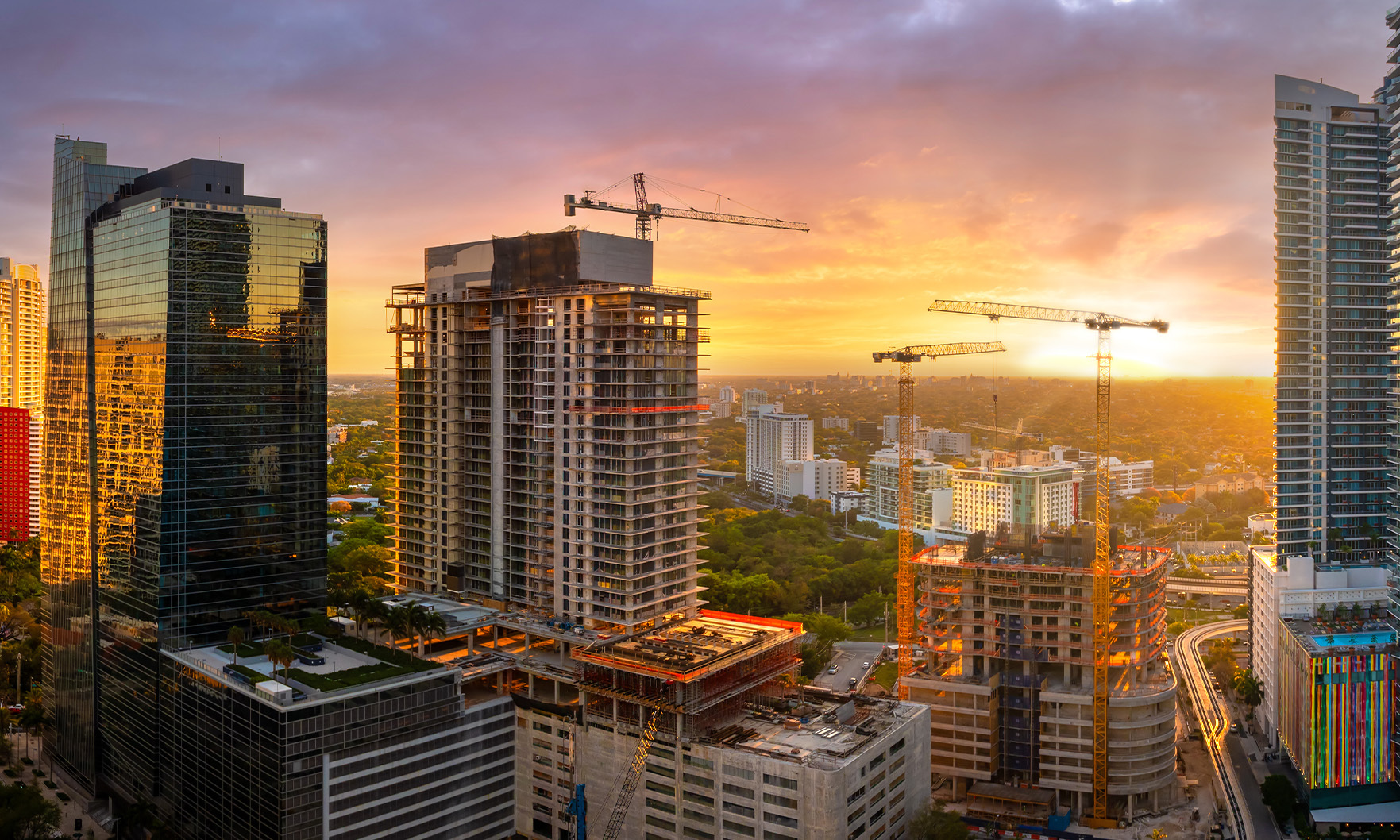
Miami is still being rebuilt. But in this phase of the market, buying “new” is not enough. The opportunity is in buying the right new product, at the right basis, with the right developer, in the right location — and with an exit strategy established before the contract is signed.
Guillermo Teran is a Miami-based broker associate at Avanti Way Realty, author of Miami’s Pre-Construction Blueprint and founder of the Avanti Way Pre-Construction Community.