
By the Numbers

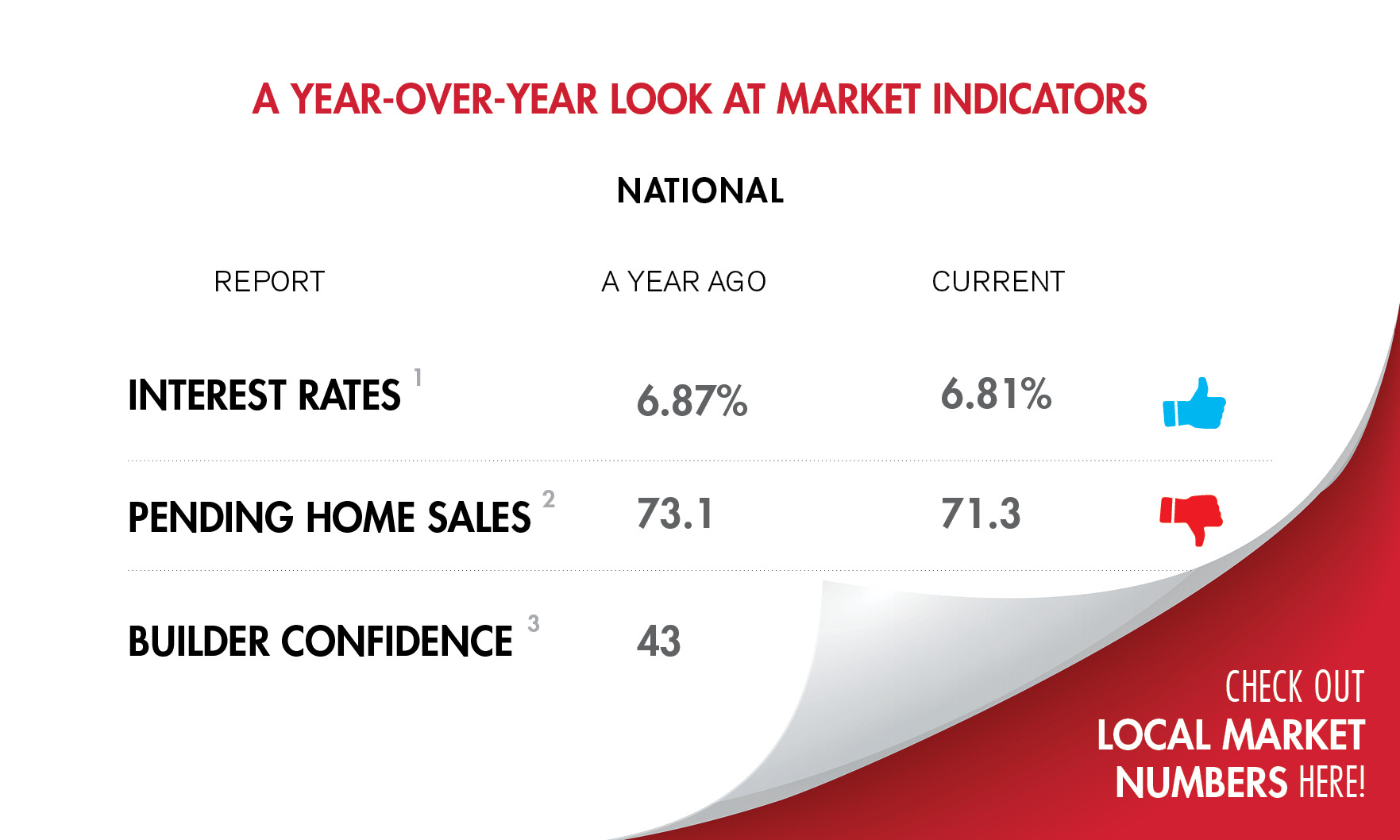
The NAHB/Wells Fargo Housing Market Index slid a point to 32, reflecting ongoing negative sentiment in the homebuilding industry.

NAR’s report — which surveyed nearly 5,000 Realtor members — also found that the typical agent took on 10 transactions in 2024, the same as a year prior.
Home-purchase activity remained elevated from 2024, but a cloudy economic outlook has deterred some would-be homebuyers.

Geographically, the only region to post a monthly increase in pending sales was the Northeast, where they rose 2.1%, according to NAR’s Pending Home Sales Index.
Nationally, the pace of home-price appreciation declined to its slowest pace in almost two years, according to the S&P CoreLogic Case-Shiller U.S. National Home Price Index.
The inventory of new homes for sale surged year over year, according to the U.S. Census Bureau and the U.S. Department of Housing and Urban Development.
At the same time, the pace of existing-home sales declined from May’s level.
Nationally, home sales rose 5.7% year over year and 1.3% month over month, RE/MAX said.
New single-family home construction declined as builders continue to grapple with macroeconomic headwinds.

Purchase applications slowed to their lowest level since May as economic worries dampened activity, the Mortgage Bankers Association said.
Existing-home sales rose in Broward County but fell elsewhere in the region.
May’s 1.8% monthly gain follows a 6.3% drop in April, the National Association of REALTORS® said.
The pace of home-price appreciation slowed to its most modest pace since 2023, according to the S&P CoreLogic Case-Shiller U.S. National Home Price Index.
The median-sales price for an existing home rose 1.3% year over year to $422,800.
Nationally, home sales slid 3.5% year over year but rose 8.6% month over month, RE/MAX said.
Homebuilder sentiment recently reached its third-lowest level since 2012.